

Program Overview
Trees and urban forests are essential to the health and well-being of communities. In Georgia, where the green industry contributes $9.97 billion annually and supports more than 100,000 jobs, this work plays a critical economic and environmental role. As cities expand into rural areas, forests become part of the built environment and must be actively managed to support residents, infrastructure, and ecosystem services.
You’ll learn to manage trees and urban forests across a range of settings, from streets and parks to rapidly growing metropolitan areas, with work that spans everything from individual tree care to city-scale planning.
After completing your degree, you’ll be prepared to pursue professional certification as a Certified Arborist® through the International Society of Arboriculture and for careers managing trees and urban forests in a variety of settings.
This area of emphasis is part of Warnell’s Natural Resources Management and Sustainability degree. Learn more here.
What You’ll Gain
You’ll build a strong foundation in the science and practice of managing trees and urban forests in human-dominated environments. Core areas of study and application include:
- Community engagement and education
- Dendrology and species identification
- Governance of urban trees
- Managing trees in built environments
- Soils and site conditions
- Spatial analysis and mapping
- Tree biology, physiology, and health
- Tree health, risk assessment, and arboricultural practices
- Tree protection ordinances and land-use planning
- Urban forest planning and management
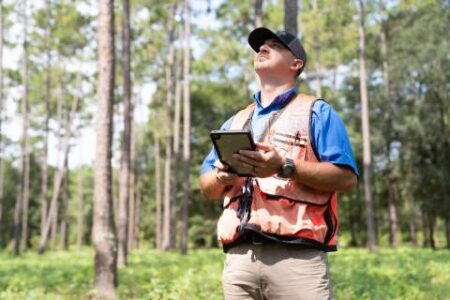
- Use of tools such as drone technology and field-based assessment methods
Hands-on experiences are a key part of the program. You’ll participate in a three-week Maymester practicum and gain practical experience through internships, working with trees and urban forest systems in real-world settings.