

Rhett Jackson
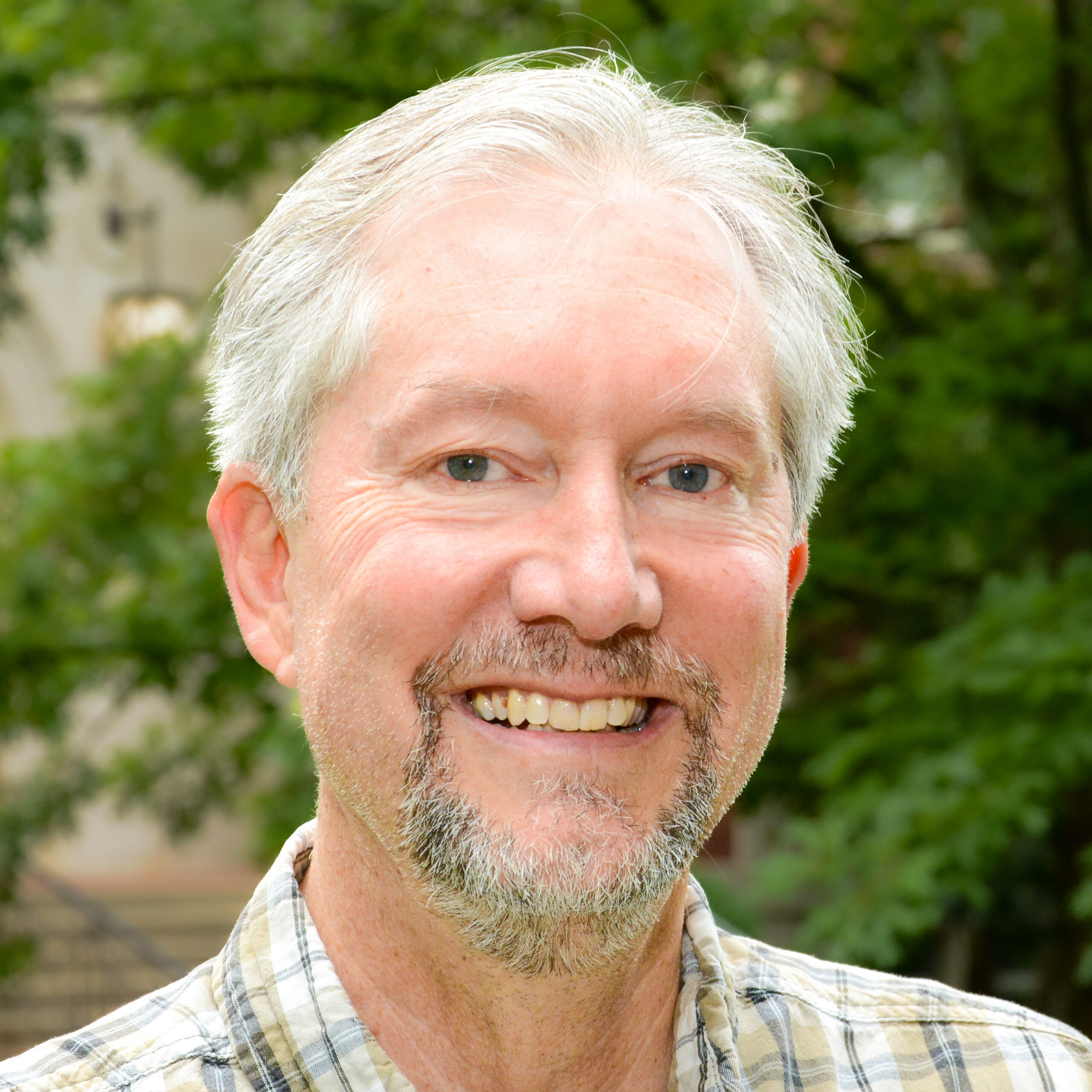


John Porter Stevens Distinguished Professor of Water Resources
I study effects of human land use activities, specifically forestry, agriculture, mining, and urbanization, on water quality and aquatic habitat. I conduct basic research in hillslope flow processes and stream temperature, and I conduct applied research into the effectiveness of best management practices (BMPs), including riparian buffers and stormwater management system, in reducing nonpoint pollution, erosion, and flooding. I also study how human activities affect streamflows and basin water and sediment budgets.
Education

Education
Ph.D., Hydrology, Dept. of Civil and Env. Engr., Univ. of Washington, 1992
MSE, Civil and Environmental Engineering, Duke University, 1985
BSE, Civil and Environmental Engineering, Duke University, 1983
Professional Appointments
Professional Appointments
Associate Dean for Academic Affairs, Warnell School, 2025 – present
Interim Associate Dean for Academic Affairs, Warnell School, 2023-2024
John Porter Stevens Distinguished Professor of Water Resources, 2019 – present
Adjunct Professor, College of Engineering, 2020 -present
Professor, Warnell School of Forestry and Natural Resources, 2008-2018
Associate Professor, Warnell School of Forestry and Natural Resources, 2003-2008
Assistant Professor, Warnell School of Forestry and Natural Resources, 1997 – 2003
Awards & Honors
Awards & Honors
2020 AGU EOS highlight of Lee et al. (2020)
2019 Water Resources Research Editor’s Choice Award for Klaus and Jackson (2018)
2019 Editor’s Citation for Excellence in Reviewing for Water Resources Research
2003 Richard B. Russell Undergraduate Teaching Award (UGA’s highest award for young faculty)
Areas of Expertise
Areas of Expertise
My research interests include the effects of human land use activities, specifically forestry, agriculture, and urbanization, on water quality and aquatic habitat and the effectiveness of best management practices (BMPs) in reducing such nonpoint source pollution. A particular current interest of mine is the relationship between riparian vegetation and channel structure and stream temperature. My work is trans-disciplinary, and I frequently collaborate with ecologists, animal biologists, and biogeochemists. Most of my applied research is viewed through the lens of hillslope hydrologic processes, my basic research interest.
Publications
Publications
McGuire, K. J., Klaus, J., C.R. Jackson. 2024. Interflow, subsurface stormflow and throughflow: A synthesis of field work and modelling. Hydrological Processes,38(9), e15263. https://doi.org/10.1002/hyp.1526316
Raulerson S, J. Jeffers, N. Griffiths, B. Rau, C. Matteson, and C.R. Jackson. 2023. Rapid denitrification of nitrate-contaminated groundwater in a low-gradient blackwater stream valley. Biogeochemistry 166, 1–20 (2023). https://doi.org/10.1007/s10533-023-01077-0
Jackson, C.R., S.J. Wenger, B.P. Bledsoe, J.M. Shepherd, K.A.. Capps, A.D. Rosemond, M.J. Paul, M. Welch‐Devine, K. Li, T., Stephens, and T.C. Rasmussen. 2023. Water supply, waste assimilation, and low‐flow issues facing the Southeast Piedmont Interstate‐85 urban archipelago. JAWRA Journal of the American Water Resources Association. 59(5):1146-1161. https://doi.org/10.1111/1752-1688.13130
Sanders, J.M., C.R. Jackson, and M. Welch-Devine. 2023. Mowers vs. Growers: Riparian Buffer Management in the Southern Blue Ridge Mountains, U.S.A. Journal of the American Water Resources Association 59:803-823. DOI: 10.1111/1752-1688.13122
Raulerson, S., C. Sytsma, J.R. Webster, and C.R. Jackson. 2023. Watersheds and stream networks viewed longitudinally: Example insights from novel spatial portrayals of watershed characteristics. River Research and Applications, 39(5):819–831. https://doi.org/10.1002/rra.4107.
Jackson, C.R., K.K. Cecala, S.J. Wenger, J.E. Kirsch, J.R. Webster, D.S. Leigh, J.M. Sanders, J.P. Love, J.D. Knoepp, J.M. Fraterrigo, A.D. Rosemond. 2022. Distinctive connectivities of near-stream and watershed-wide land uses differentially degrade rural aquatic ecosystems. Bioscience 72:144-159.
Younger, Seth E, C.R. Jackson, Todd C. Rassmussen. 2020. Relationships among forest type, watershed characteristics, and watershed ET in rural basins of the Southeastern US. Journal of Hydrology 591: 125316. 10.1016/j.jhydrol.2020.125316
Coats, W.A. and C.R. Jackson. 2020. Riparian Canopy Openings on Mountain Streams: Landscape controls upon temperature increases within openings and cooling downstream. Hydrological Processes 34(8):1966-1980. doi: 10.1002/hyp.13706
Lee, R.M., K.J. McGuire, B.D. Strahm, J.D. Knoepp, C.R. Jackson, and R.D. Stewart. 2020. Revisiting the Hewlett and Hibbert (1963) hillslope drainage experiment and modeling effects of decadal pedogenic processes and leaky soil boundary conditions. Water Resources Research. 56, e2019WR025090. https://doi.org/ 10.1029/2019WR025090.
Klaus, J. and C.R. Jackson. 2018. Interflow Is Not Binary: a Continuous Shallow Perched Layer Does Not Imply Continuous Connectivity. Water Resources Research 54, 5921–5932.
C. Rhett Jackson – Google Scholar
Other Links
Other Links
Curriculum Vitae: Dr. Jackson CV (9.34 MB)
Other Affiliations: Coweeta LTER web page, My colleague Todd Rasmussen’s page, Univ. Georgia Water Resources Web Site