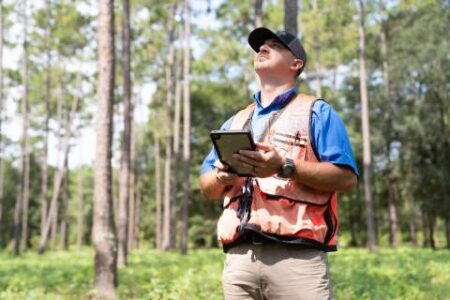


Troy Simon



Staff Scientist, Cooperative Fish and Wildlife Research Unit
Education

Education
BSc, Biology, Marine Biology Certificate, Florida State University, 2009
PhD, Ecology, University of Georgia, 2015
Professional Appointments
Professional Appointments
Research Professional IV, GA Cooperative Fish and Wildlife Research Unit, University of Georgia, 2022–Present
Research Professional III, Warnell School of Forestry & Natural Resources, University of Georgia, 2019–2022
Research Professional II, Warnell School of Forestry & Natural Resources, University of Georgia, 2015–2019
Other Professional Experience
Other Professional Experience
Collaborator, Network for Engineering With Nature (N-EWN) an active community of researchers, practitioners and educators who are addressing the major infrastructure challenges facing our society while creating opportunities that align ecological, social and engineering processes to achieve multiple societal benefits, 2022
Collaborator, National Ecological Observatory Network (NEON), collaborating with stream ecologists and engineers with NEON’s only experimental study, STREON, to develop the electric exclosure method in stream sites from Alaska to Puerto Rico, 2011–2015
Awards & Honors
Awards & Honors
Feature article Staff Profile in UGA Columns, 2025
Featured Cover Article Journal Fish Biology, 2025
Warnell Alumni Staff Award recipient, 2023
Warnell Service Award, 2020
Simon et al. featured in the Bulletin of the Ecological Society of America, 2019
Recognized for coauthoring the most read paper in Ecology of Freshwater Fish 2018–2019
Simon et al. featured in and interviewed for the journal Nature, 2018
Honorary representative for Parkyn-Legacy Travel-Grant Award winners at INTECOL, 2013
National Science Foundation Graduate Research Fellowship (NSF GRFP), 2012
Best Oral Presentation, Odum School of Ecology Graduate Student Symposium, 2012
Graduated with honors from Florida State University, Department of Biology, 2009
Publications
Publications
Simon, T. N., K. F. Robinson, B. J. Irwin. 2026. Estimating the power of standardized monitoring data for sportfish in Georgia, USA. North American Journal of Fisheries Management 46(2):300-317. https://doi.org/10.1093/najfmt/vqaf117
Holubová, M., J. Peterka, T. Simon, J. Neuswanger, and G. Grossman. 2025. Dominance and size affect foraging position choice by Arctic Grayling (Thymallus arcticus). Journal of Fish Biology 106(2): 552-563. https://doi.org/10.1111/jfb.15974
Simon, T.N. 2024. Standard operating procedures comparison for the Georgia Department of Natural Resources standardized annual reservoir sampling. Submitted Georgia Department of Natural Resources.
Grossman, G. D. and T. Simon. 2020. Density-dependent effects on salmonid populations: a review. Ecology of Freshwater Fish 29:400-418. https://doi.org/10.1111/eff.12523
Grossman, G. D. and T. Simon. 2020. Student Perceptions of Open Educational Resources Video-Based Active Learning, in University-Level Biology Classes: A Multi-Class Evaluation. Journal of College Science Teaching 49:36-44. https://doi.org/10.1080/0047231X.2020.12290663
Grossman, G. D., B. B. Bozeman, R. Sliger, T. N. Simon, and G. Matsumoto. 2020. Open educational resource exercises for fisheries classes. Fisheries 76:76-80. https://doi.org/10.1002/fsh.10529
Simon, T. N., A. J. Binderup, A. S. Flecker, M. C. Freeman, J. F. Gilliam, M. C. Marshall, S. A. Thomas, J. Travis, D. N. Reznick, and C. M. Pringle. 2019. Landscape patterns in top-down control of decomposition: omnivory disrupts a tropical detrital-based trophic cascade. Ecology 100(7):e02723. https://doi.org/10.1002/ecy.2723
Donofrio, E., T. Simon, J. Neuswanger, and G. D. Grossman. 2018. Velocity and dominance affect prey capture and microhabitat selection in juvenile Chinook (Oncorhynchus tshawytscha). Environmental Biology of Fishes 101:609-622. https://doi.org/10.1007/s10641-018-0723-5
Grossman, G. D. and T. Simon. 2018. Student Perceptions of an Inquiry-Based Karaoke Exercise for Ecologically Oriented Classes: A Multiclass Evaluation. Journal of College Science Teaching 47:92-99. https://doi.org/10.2505/4/jcst18_047_05_54
Murray, K. M., D. Stoker, C. M. Pringle, and T. N. Simon. 2018. Is spatial variation in population size structures of a stream-dwelling caddisfly due to the altered effects of a predator by a third-party species? Hydrobiologia 820:65-77. https://doi.org/10.1007/s10750-018-3674-0
Moerke, A. H., C. R. Ruetz, T. N. Simon, and C. M. Pringle. 2017. Macroconsumer-Resource Interactions. Methods in Stream Ecology, Vol 1: Ecosystem Structure, 3rd Edition. F. R. Hauer and G. A. Lamberti. London, Academic Press Ltd-Elsevier Science Ltd. 399-412. https://doi.org/10.1016/B978-0-12-416558-8.00019-6
Bassar, R. D., T. N. Simon, W. Roberts, J. Travis, D. N. Reznick. 2017. The evolution of coexistence: reciprocal adaptation promotes the assembly of a simple community. Evolution 71(2):373-385. https://doi.org/10.1111/evo.13086
Simon, T. N., R. D. Bassar, A. J. Binderup, A. S. Flecker, M. C. Freeman, J. F. Gilliam, M. C. Marshall, S. A. Thomas, J. Travis, D. N. Reznick, and C. M. Pringle. 2017. Local adaptation in Trinidadian guppies alters stream ecosystem structure at landscape scales despite high environmental variability. Copeia 105(3):504-513. https://www.jstor.org/stable/26872460
Simon, T. N. and D. R. Levitan. 2011. Measuring fertilization success of broadcast-spawning marine invertebrates within seagrass meadows. The Biological Bulletin 220(1):32-38. https://doi.org/10.1086/BBLv220n1p3
Simon, T. N. and J. Travis. 2011. The contribution of man-made ditches to the regional stream biodiversity of the New River watershed in the Florida panhandle. Hydrobiologia 661:163-177. https://doi.org/10.1007/s10750-010-0521-3
Other Links
Other Links